
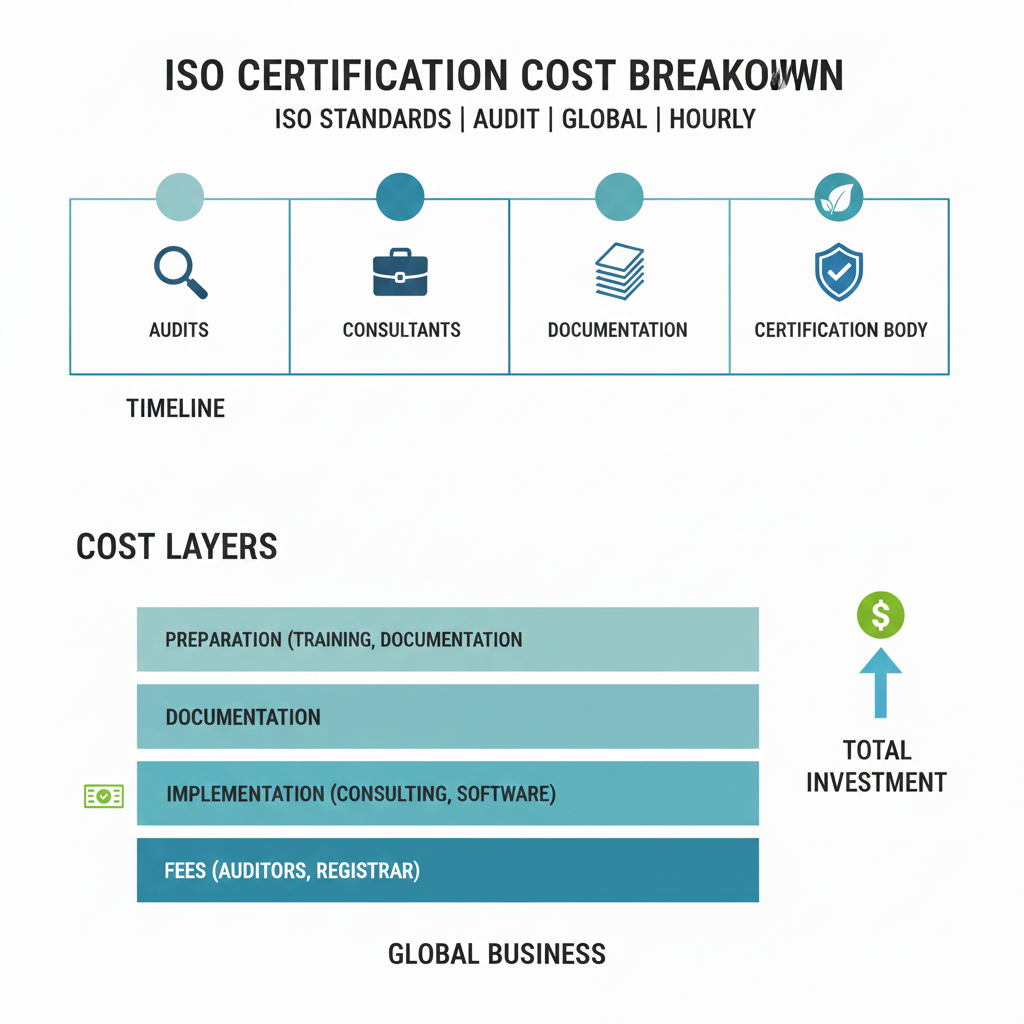
Many organisations ask an important question before starting compliance: ISO certification cost. While ISO certification delivers credibility, efficiency, and global recognition, the price is not always clear at the beginning. However, ISO certification is not a fixed price. Instead, costs vary based on the standard, company size, and level of preparation. Therefore, understanding the full cost breakdown helps businesses budget accurately and avoid unexpected expenses.
This article therefore explains what ISO certification costs, furthermore outlines what influences pricing, additionally highlights key cost drivers, as a result clarifies expectations, and ultimately shows how organisations can manage expenses effectively.
What Is ISO Certification?
ISO certification therefore confirms that a business meets internationally recognised standards for quality, safety, security, or environmental management. In addition, these standards are globally issued by the International Organization for Standardization (ISO), as a result ensuring consistency across industries and regions.O).
Common ISO standards include:
- ISO 9001 (Quality Management)
- ISO 14001 (Environmental Management)
- ISO 27001 (Information Security)
- ISO 45001 (Occupational Health and Safety)
As a result, ISO certification therefore clearly demonstrates structured systems and consistent performance overall.
ISO Certification Cost: What Does It Include?
The ISO certification cost usually includes several components. Understanding each part helps clarify the total investment.
Typical cost elements include:
- Gap analysis and readiness assessment therefore typically support effective planning overall.
- Documentation development therefore consistently supports structured compliance processes.
- Implementation support therefore plays a critical role in practice, additionally ensuring systems are applied correctly and ultimately supporting successful ISO certification outcomes.
- Internal audits
- Certification audit fees
- Surveillance audits
Therefore, ISO certification should consequently be viewed as an ongoing process overall, rather than merely a single expense.
Businesses looking to manage ISO certification cost effectively can benefit from the structured support offered by Global Compliance Consultant’s ISO implementation services
Average ISO Certification Cost Range
Although prices vary, general cost ranges are as follows:
- Small businesses: USD $3,000 – $8,000
- Medium organisations: USD $8,000 – $20,000
- Large or complex organisations: USD $20,000+
However, these figures depend heavily on preparation, risk level, and audit scope.
ISO Certification Cost by Standard
In most cases, ISO 9001 is usually the most affordable standard.
ISO 9001 is therefore usually the most affordable standard overall.
- Approximate cost: USD $3,000 – $10,000
ISO 14001 Certification Cost
Environmental compliance therefore significantly increases documentation and audit effort overall.
- Approximate cost: USD $5,000 – $15,000
ISO 27001 Certification Costs
Information security therefore requires detailed risk assessments and controls overall.
- Approximate cost: USD $8,000 – $25,000+
ISO 45001 Certification Cost
Health and safety systems therefore largely depend on workforce size and risk overall.
- Approximate cost: USD $6,000 – $18,000
Consequently, more complex standards therefore significantly increase certification costs overall.
Consultant Fees vs Certification Body Fees
ISO certification costs therefore typically come from two main sources overall.
Consultant Costs
Consultants support:
- Documentation
- Implementation
- Training
- Internal audits
Certification Body Costs
Certification bodies charge for:
- Stage 1 audit
- Stage 2 audit
- Surveillance audits
Therefore, total cost combines professional support and formal certification fees.
For official guidance on ISO standards, certification frameworks, and international best practices, refer to the International Organization for Standardization (ISO).
One-Time Costs vs Ongoing ISO Costs
ISO certification is therefore not simply a one-time payment overall and in practice.
One-Time Costs
- Initial implementation
- Certification audits
Ongoing Costs
- Annual surveillance audits
- System maintenance
- Staff training
- Recertification every three years
Consequently, businesses therefore must plan carefully for long-term compliance costs overall.
How to Reduce ISO Certification Cost
Organisations therefore can effectively control costs by doing the following:
- Preparing documentation early
- Training internal teams
- Choosing the right consultant
- Combining multiple ISO standards
- Maintaining systems consistently
Therefore, preparation significantly reduces long-term expenses.
How Global Compliance Consultant Supports Cost-Effective Certification
Global Compliance Consultant helps organisations manage ISO certification efficiently and transparently. By focusing on structured systems and scalable compliance frameworks, the firm helps businesses avoid unnecessary costs.
Their support therefore typically includes the following:
- ISO readiness assessments
- Documentation frameworks
- Implementation guidance
- Internal audits
- Ongoing compliance advisory
As a result, ISO certification therefore clearly demonstrates structured systems and consistent performance overall.
Is ISO Certification Worth the Cost?
For many organisations, the answer is yes. While ISO certification involves upfront investment, it delivers:
- Improved efficiency
- Stronger credibility
- Better risk management
- Increased client trust
- Competitive advantage
Therefore, ISO certification should consequently be viewed as a strategic investment overall, not merely an expense.
Conclusion
So, the ISO certification price therefore depends on standards, organisation size, industry risk, and preparation level overall. While costs vary, businesses however, in practice, that plan carefully and additionally work with experienced consultants can ultimately manage expenses effectively.
For organisations aiming to improve performance and meet global expectations, ISO certification offers long-term value that often outweighs the initial price.