
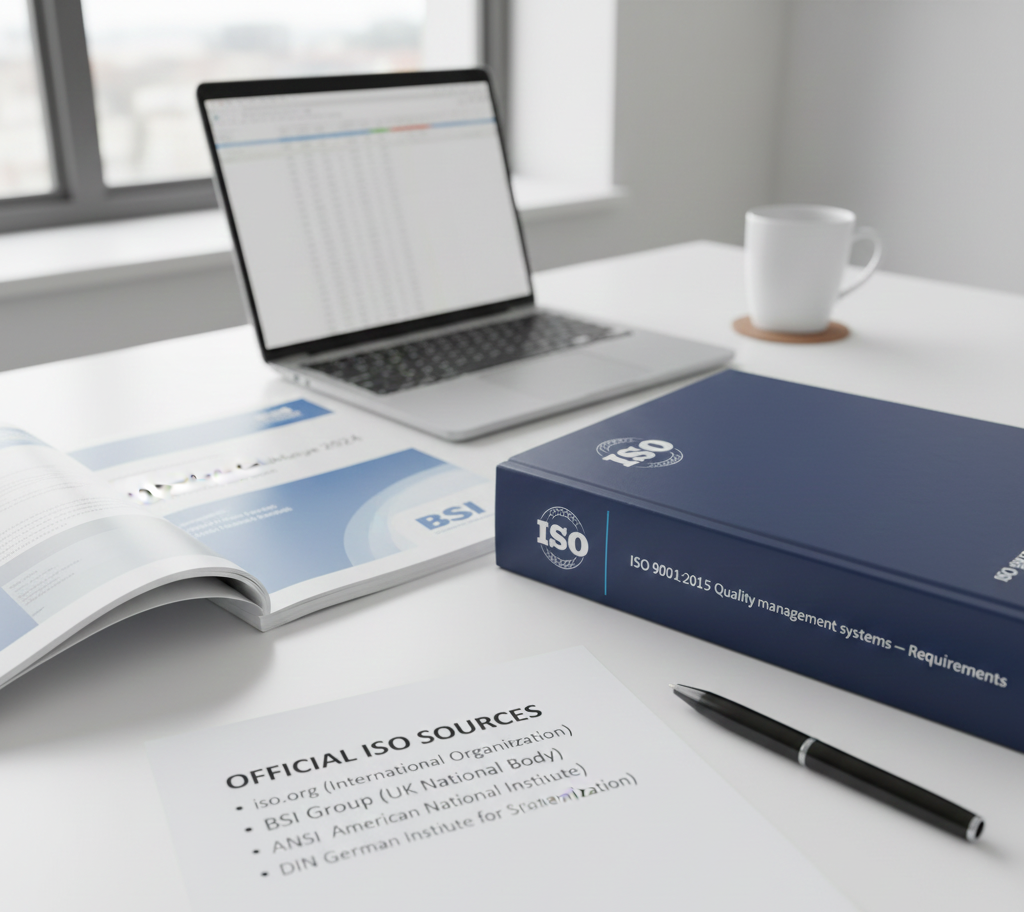
If you are trying to find ISO standards, it usually means you have reached the serious part of the process. Often, this happens after a tender requirement, an audit question, or a client asking for specifics. At that point, organisations tend to speak to advisers like Global Compliance Consultants, not for shortcuts, but rather to avoid relying on unofficial or outdated information.
In practice, ISO standards are not freely available in full. Therefore, knowing where to find the official versions—and where not to rely on summaries ultimately saves time and prevents mistakes later.
Why official sources matter
ISO standards are copyrighted documents. That means only authorised bodies can sell or distribute the full, official versions. While summaries exist online, they often omit critical clauses or misinterpret intent.
As a result, businesses that rely on unofficial copies risk:
- Implementing outdated requirements
- Missing mandatory clauses
- Failing audits due to incorrect references
Therefore, using official sources is not about formality. It’s about accuracy.
find ISO standards
The official way to find ISO standards is through authorised national or international standards bodies. In the UK, the primary source is BSI (British Standards Institution), which sells official ISO and BS-EN ISO standards.
BSI publishes:
- ISO standards adopted in the UK
- British and European aligned versions
- Current and withdrawn editions
This ensures businesses reference the correct and current version during audits.
find ISO standards
find ISO standards
Many businesses search online and find free PDFs claiming to be ISO standards. In most cases, these are either summaries, drafts, or outdated versions.
The safest options are:
- Purchasing standards directly from BSI
- Accessing them through licensed platforms
- Using consultant-provided reference copies (where permitted)
Although purchasing standards has a cost, it avoids far greater costs later caused by incorrect implementation.
For official UK context on standards, accreditation, and conformity, see:
https://www.gov.uk/guidance/conformity-assessment-and-accreditation
What ISO standards you usually need
Most organisations do not need dozens of standards. They usually need one or two that match their risks and contracts.
Common examples include:
- ISO 9001 for quality management
- ISO 14001 for environmental management
- ISO 45001 for occupational health and safety
Choosing the right standard first reduces unnecessary spend and complexity. Consequently, many businesses review tender requirements before buying any documents.
How consultants use ISO standards
This is where compliance & certification and consultancy support really matter. In practice, Global Compliance Consultants do not resell ISO standards. Instead, they help businesses interpret requirements correctly and then apply them to real operations.
In addition, digital solutions help map clauses to actual processes. Meanwhile, SME support keeps interpretation proportionate. As a result, business setup services help new organisations build systems aligned to standards without copying text verbatim.
Related guidance:
https://globalcomplianceconsultants.com/iso-certification
Checking you have the correct version
ISO standards are updated periodically. Because of this, using an outdated version can invalidate certification work.
For that reason, businesses should always check:
- Publication year of the standard
- Whether amendments apply
- Which version certification bodies audit against
Certification bodies will confirm the applicable edition during audits. However, preparation should start with the correct document from the outset to avoid unnecessary rework later.
What not to rely on
It’s tempting to rely solely on:
- Blog summaries
- Template policies
- Forum explanations
While these can help with general understanding, they should never replace the official standard. In reality, auditors reference the official text, not online interpretations.
Conclusion
To find ISO standards correctly, businesses must use authorised sources and current editions. Ultimately, official documents provide clarity, consistency, and confidence during audits and client reviews.
When used properly, ISO standards become practical guides rather than abstract rules. As a result, Global Compliance Consultants support UK organisations in interpreting and applying ISO standards accurately, without unnecessary complexity or guesswork. unnecessary complexity or guesswork.
Below are more blogs building on our ISO guidance. 👇
How to Get ISO Certification in the UK: Step-by-Step
What Is ISO 9001 in Simple Terms?
Website: https://globalcomplianceconsultants.com/
Email: info@globalcomplianceconsultants.com
Phone: +44 7478 744797