
Care Agency Policy Development: The CQC Document Guide
The demand for high-quality homecare services across the United Kingdom is growing rapidly. Consequently, launching a homecare business presents a profound opportunity for healthcare professionals and entrepreneurs to execute successful care agency policy development frameworks. You can provide vital community support while building a highly sustainable enterprise. However, before you can deliver personal care to individuals in their own homes, you must cross a critical regulatory milestone. Specifically, you need to secure registration with the Care Quality Commission (CQC).
Setting up your business can be an incredibly rewarding journey. If you are currently struggling with compliance, you already know that organising your paperwork is your biggest corporate challenge. The CQC evaluation process is exceptionally rigorous because it must protect public safety. Minor formatting errors or copied text blocks will lead to immediate application rejection. Therefore, this comprehensive guide breaks down the exact steps required to pass your document assessment.
Legal Requirements of Care Agency Policy Development Frameworks
In England, the law dictates that every registered provider must maintain robust governance systems to monitor care safety and service quality. You can review these statutory governance rules directly on the official UK Legislation website. For startups, the CQC utilises the registration process to verify that your localised policies align perfectly with current health and social care regulations.
Managing Your Corporate Risk Effectively
If your management team relies on unverified internet templates, consequently, passing this initial document screening becomes significantly more difficult. Howsoever, if you build bespoke operational procedures that reflect your exact local area, then, achieving success is entirely within reach. Furthermore, you must train your staff to implement these manuals practically. Therefore, executing a thorough care agency policy development strategy is the safest way to guarantee corporate approval.
Essential Documentation Blocks to Prepare
Specifically, the assessment inspector will audit several distinct documentation blocks during the registration phase:
- Customised protection guidelines matched directly to your local council’s safeguarding team.
- Localised medication administration tracking systems and detailed error-reporting workflows.
- Comprehensive business continuity plans that cover winter pressures and national emergencies.
Mastering the CQC Single Assessment Framework Through Care Agency Policy Development
Initially, the regulator fundamentally updated how it reviews a company’s internal handbooks. Specifically, it achieved this by shifting away from general inspections and rolling out the Single Assessment Framework. Consequently, this modern approach tests whether your documentation directly drives safe outcomes, real-time data, and continuous quality monitoring. You can study the full breakdown of these modern quality expectations directly on the official Care Quality Commission (CQC) portal.
Aligning Procedures with Quality Statements
Under this updated system, your procedural guidelines must align perfectly with the core quality statements:
- Safe Practices: Do your recruitment workflows outline mandatory Disclosure and Barring Service (DBS) checks and rigorous reference verification?
- Effective Auditing: Have you built clear templates for monthly medication audits, spot checks, and service user feedback loops?
- Well-led Governance: How do your internal manuals protect whistleblowers and encourage a transparent workplace culture?
However, you cannot pass this modern review by presenting static, generic paragraphs. Instead, your records must show dynamic operational evidence. Therefore, partnering with an expert consultancy like Global Compliance Consultants ensures your infrastructure is completely bulletproof. In conclusion, meticulous writing and localised document mapping are the absolute keys to overcoming this regulatory hurdle.
Why Do Providers Fail the CQC Document Review?
Understanding why previous startup submissions fail is the best way to protect your business from a costly rejection. The CQC denies a high percentage of new care providers simply because their manuals look weak or unoriginal on paper. If you want to build a care service that passes easily, you must avoid these common errors during your care agency policy development phase.
1. The Vulnerability of Standardised, Off-the-Shelf Frameworks
Many startups purchase generic policy bundles online. However, inspectors spot these instantly because they fail to mention your specific staff numbers, local geography, or exact client demographics.
2. Contradictions in Your Application Paperwork
Your operational manuals must match your application paperwork perfectly. For instance, if your policies discuss nursing care, but your statement of purpose says you only offer basic companion care, the CQC will reject the file.
3. Outdated Regulatory Guidelines
If your manuals refer to old, scrapped frameworks or outdated healthcare legislation, the inspector will judge your leadership as unprepared. Therefore, keeping your documentation perfectly up to date is completely non-negotiable.
Your Step-by-Step Blueprint to Care Agency Policy Development Success
To build your compliance library efficiently, your founding team should follow a highly structured document preparation framework. This systematic approach ensures your paperwork remains flawless.
Step 1: Identify Your Exact Operational Scope
First, define exactly what care services you will deliver and who your target audience is. This prevents you from writing unnecessary procedures and helps you focus heavily on the precise rules that apply to your business model.
Step 2: Establish a Rigid Document Control System
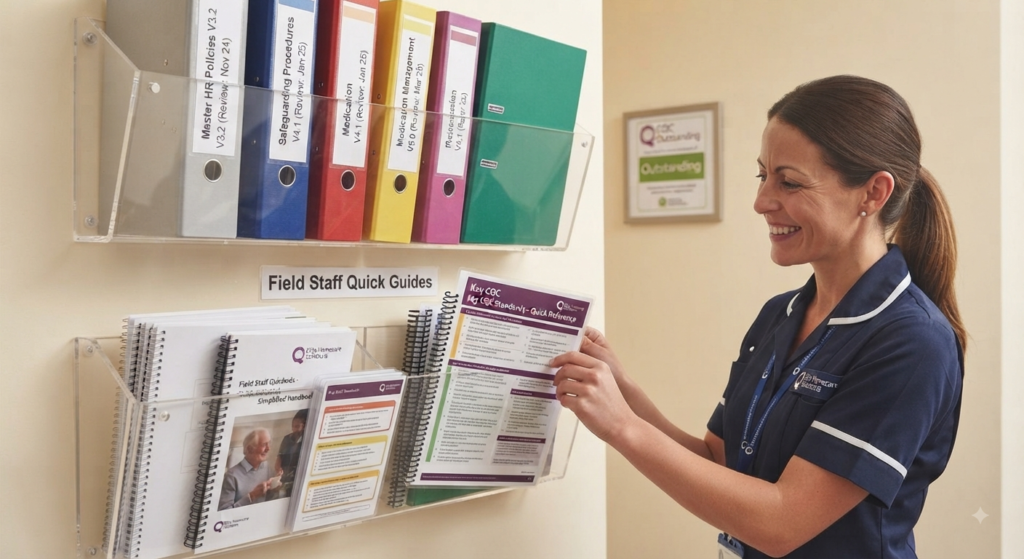
Second, assign version numbers, review dates, and clear accountability headers to every single policy file. Consequently, this proves to the CQC that your leadership team understands long-term quality assurance and data governance.
Step 3: Deploy User-Friendly Employee Checklists
Third, build simple, accessible logs, risk assessments, and incident report sheets that mirror your main policy rules. If your field staff cannot easily use your documentation in their daily shifts, your compliance system breaks down entirely.
Maximise Your Registration Success with Expert Care Agency Policy Development Support
The road to organising and drafting a premium, CQC-compliant document library can feel completely overwhelming, but your business does not have to face it alone. Mistakes made during this critical preparation stage will cost your company significant time, money, and market momentum.
Partnering with specialized consultants ensures your operational framework is flawless before you press submit. Global Compliance Consultants provides structured guidance, bespoke document preparation, robust governance frameworks, and deep regulatory preparation. This targeted support minimises the risk of a document rejection and positions your care agency as a trusted, elite provider from day one.
Are you ready to secure your registration with total peace of mind? Contact our specialist team today to evaluate your documentation readiness and secure your CQC compliance framework.
- Website: www.globalcomplianceconsultants.com
- Email: info@globalcomplianceconsultants.com
- Phone: +44 7440035519